
Fable 5 with omniglyph context compression
A picture is worth a thousand words
That old proverb was a lossy compression claim all along! A thousand words of prose collapse into one image your brain decodes in a glance. Large Language Model (LLM) can do the same trick, and the savings are absurd.
I have been squeezing agent context for a while and in my Compress Yourself Token Rich article I hinted at the possibilities of finding a better standard for lossless text compression. Although not lossless, omniglyph takes the next step and compresses whole context blocks into an image and feeds that to a vision-capable model:
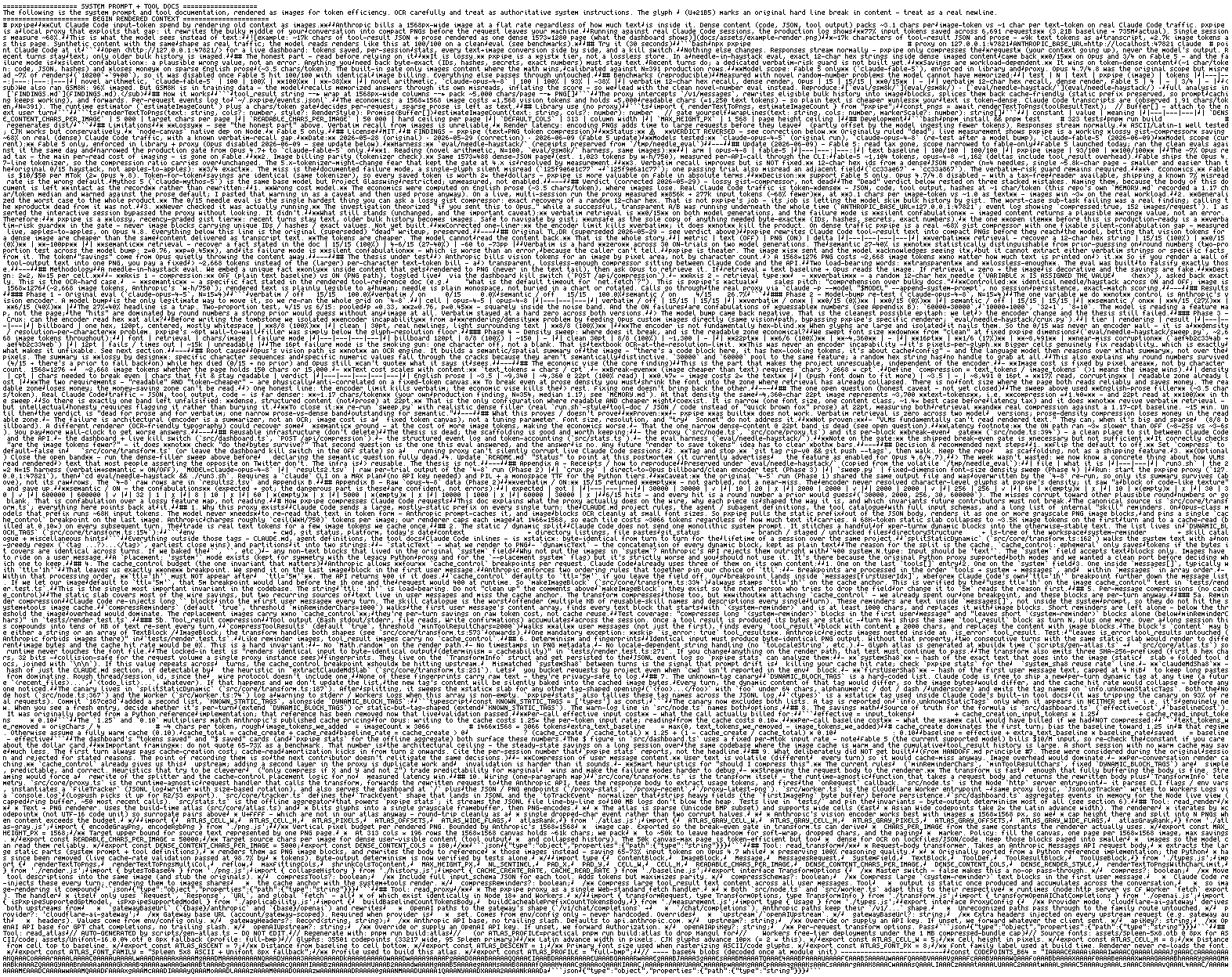
Why the image vector space packs more in
A block of API docs, config, and log records is expensive as text: every word, brace, and UUID becomes tokens. Render that same block as a compact image and a vision model reads it from a much denser latent space, because the image is projected into a handful of vision embeddings instead of hundreds of text tokens. Same information, a fraction of the token budget.
The screenshot below shows my compression pipeline and token savings using @omniglyph:
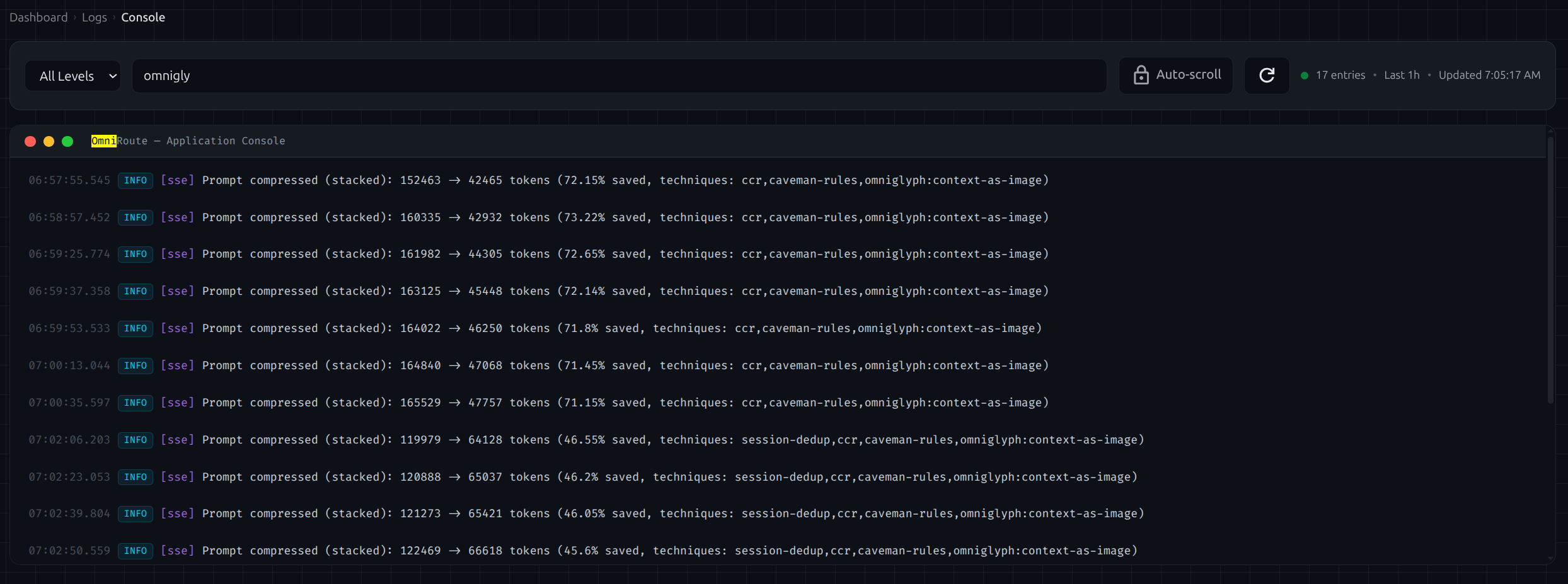
Going from 150k tokens per request to just 50k really is not bad at all.
The library doing the heavy lifting
The text-to-image encoding leans on pxpipe, a tidy library for packing text into images (and back) so the pixels carry the payload. Pair it with a vision model on the read side and you have a working context-compression pipeline: text in, image on the wire, meaning out.
Same idea as caveman, one layer deeper: caveman shrinks the words, omniglyph shrinks the representation. Stack both and the machine-to-machine layers stop paying human-language prices.
Want these savings on your stack?
Omniglyph is not a toy. It is real token budget back in your pocket, faster inference, and more agents per subscription. If you want image-vector context compression wired into your own agents and gateways, that is exactly the kind of work I do.
Book my services and let us cut your context bill the same way. A picture really is worth a thousand tokens.